The Murdered
Russell Bean
Marlow, New Hampshire
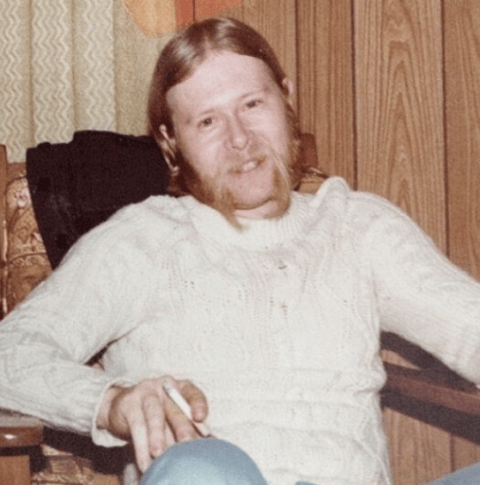
🕯️🔎 Buried for a Decade: The Unsolved Murder of Russell Bean 🔎🕯️
In September 1978, 26-year-old Russell Bean disappeared, leaving behind questions that would haunt a small New Hampshire community for the next decade. At the time, his disappearance did not initially lead investigators to suspect foul play. No one could have imagined that the truth would eventually lead them to a muddy patch of ground on property belonging to a local police chief.
For nearly 10 years, Russell’s whereabouts remained unknown. Then, in March 1988, a deathbed confession changed everything.
💔 Russell was last seen alive on September 15, 1978. After he disappeared, an investigation followed, but his case remained unresolved, and his loved ones were left without answers about what had happened to him.
Years passed without knowing where Russell was or whether he would ever be found. Then, as Clifton Chambers approached the end of his life in early March 1988, he revealed a secret that would lead investigators to a shocking discovery.
According to court records and accounts of the case, Clifton implicated his son, Robert Chambers, in Russell’s killing and identified where Russell’s body could be found. Clifton reportedly asked his daughter, Melissa, not to reveal what he had told her until after his death.
On March 9, 1988, Clifton died at the age of 61 following a cerebral hemorrhage. That same day, Melissa went to police in Keene, New Hampshire, and shared the information her father had disclosed.
What followed would transform Russell’s disappearance into an unsolved homicide investigation that stunned the small town of Marlow.
🔎 Acting on the information provided by Clifton’s deathbed statement, New Hampshire State Police obtained search warrants and began excavating an area on property associated with the Chambers family along Newell Pond Road in Marlow.
The search took place during New England’s notorious mud season, when the ground becomes saturated and difficult to navigate. Investigators were directed to an area that had once been used as a pigpen.
This was no simple search. Heavy machinery was brought in to remove enormous quantities of earth, and the excavation continued for three days. Despite the difficult conditions and a late-season snowfall, investigators kept digging.
Eventually, they uncovered skeletal remains buried deep beneath the ground.
After nearly a decade of unanswered questions, Russell Bean had finally been found.
Identifying the remains and determining how Russell died required extensive forensic work. The bones had been buried for years and were coated in mud, making the examination particularly challenging.
Medical examiners and forensic specialists worked together to study the remains, using advanced imaging techniques to distinguish injuries from damage caused by years underground.
Dental records ultimately confirmed the identity investigators suspected: the remains belonged to Russell Bean, who had disappeared in 1978.
The autopsy determined that Russell had died from traumatic injuries, including blunt force trauma to the head. His death was officially classified as a homicide.
But while investigators had recovered Russell’s remains and established that he had been killed, the discovery opened another chapter of unanswered questions.
⚖️ The property where Russell’s remains were discovered belonged to Robert Chambers, Clifton’s son, who was serving as a part-time police chief in Marlow and Gilsum at the time.
The discovery sent shockwaves through the community. The man connected to the property where Russell was buried was also a local law enforcement official.
Robert Chambers was arrested in connection with Russell’s murder. However, he was never indicted or tried for the homicide, and the case remains open and unsolved. An arrest is not a determination of guilt, and the allegations were never resolved through a criminal trial.
Despite the discovery, the forensic findings, and the information provided by Clifton before his death, no one has been brought to trial for Russell’s killing.
The case left a devastating question hanging over Marlow: how could a man disappear for a decade, be found buried on a police chief’s property, and still have his murder remain unsolved?
🕊️ Russell was only 26 years old when he disappeared. His life ended violently, and his remains lay hidden for years before investigators finally discovered what had happened to him.
Finding Russell brought an end to one part of the mystery, but it did not deliver the full truth. His loved ones were left without the answers that a completed investigation and a resolution in court might have provided.
Someone may know more about Russell’s final days. Someone may remember a conversation, an event, or a detail that could help investigators understand what happened and why.
Decades have passed, but the questions surrounding his death remain important.
📢 Do you have information about the murder of Russell Bean?
Anyone with information is encouraged to contact the New Hampshire authorities or the agency investigating the case.
New Hampshire Department of Justice: 603-271-3658
🕯️ Russell Bean was more than a name in an old case file. He was a 26-year-old man whose life was taken, whose remains were hidden for nearly a decade, and whose homicide remains unresolved.
His body was found, but justice has never been fully served. After all these years, Russell’s story still deserves to be told, and the truth deserves to come to light.
Sources:
The Disappearance of Russell Bean (New Hampshire) | Dark Downeast


Leave a Reply